Individual bans have already been decided:

  • Ban on basic substances for impregnating agents in the EU.
  • Ban in cosmetics and waxes in France.
  • An EU-wide ban on packaging that comes into contact with food will come into force shortly.
  • And a general restriction for precautionary reasons is in preparation in the EU.

What are PFAS and why are they banned?

Organic compounds containing fluorine (fluorocarbons), and in particular the PFAS (per- and polyfluorinated alkyl compounds), have some outstanding properties such as high chemical and thermal stability, water/oil/grease/dirt repellency, non-flammability, electrical inertness, etc., which have enabled them to establish themselves and prove their worth in a wide range of applications over the last few decades. Popular examples include Teflon pans, dirt-repellent textiles, and ski waxes. Highly specialized, lesser-known examples include epilams in the watch industry and pharmaceutical agents such as fulvestrant. Many materials in the process industry also benefit from these advantageous properties, such as seals, even if no fluorine compounds are used in the process itself.

Permanent chemicals

Conversely, these special properties also have disadvantages. The problem is that PFAS are so-called “forever chemicals.” Due to their stability, these chemicals hardly degrade in the environment and accumulate in humans, animals, and ecosystems (POP = persistent organic pollutants; vPvB = very persistent, very bioaccumulative; PBT = persistent, bioaccumulative, and toxic). In principle, many PFAS are considered biocompatible, but some of them have also been proven to be harmful to health. However, the effects of many compounds are not yet known. As a precautionary measure, their use should therefore be minimized by law.

Overview of all PFAS regulations

In view of these risks, the European Commission has decided via the PPWR to ban PFAS in food contact packaging from August 12, 2026 (PPWR Article 21, Recitals 20 and 21). Within the PFAS substance class, which consists of thousands of different chemical substances, there have already been individual legal restrictions, which we present to you as follows:

  • Various critical substances have been restricted in recent years under the REACH Regulation (EU) 1907/2006, either by inclusion in Annex XVII or by classification as SVHC. Example: PFHxA = Undecafluorohexanoic acid was included in Annex XVII of REACH as No. 79 by Regulation (EU) 2024/2462. This substance and related substances are therefore prohibited from October 10, 2026, in the following applications, among others: Textiles, leather, footwear for the general public (exemptions for workwear); paper and cardboard as food contact materials (e.g., pizza boxes); mixtures for the general public; cosmetics. Firefighting foams are also regulated here. Other applications are not affected by this law.
  • Based on the 1979 Stockholm Convention on POPs, the EU and Switzerland subsequently banned PFOS = perfluorooctane sulfonic acid, PFOA = perfluorooctanoic acid, PFHxS = perfluorohexane sulfonic acid, and many other substances were subsequently banned (in the EU, this is laid down in the POP Regulation (EU) 2019/1021, and in Switzerland in the Chemical Risk Reduction Ordinance ChemRRV). Some entries in REACH Annex XVII have been replaced as a result (e.g., PFOA in REACH Annex XVII, No. 68 by means of (EU) 2020/2096). Substances that have been banned for a long time, such as DDT and lindane, are also listed again in this POP Regulation (Annex I).
  • At the end of 2023, the European cosmetics association Cosmetics Europe (CE) issued a recommendation to voluntarily phase out the use of these substances by the end of 2025.
  • France has implemented this CE recommendation in Law No. 2025-188 (February 27, 2025). This means that from January 1, 2026, the marketing of cosmetics and wax products (e.g., shoe polish, ski wax) on the French market will be prohibited if PFAS have been intentionally added. Decree No. 2025-1376 (December 28, 2025) sets limits for residual PFAS content.
  • In accordance with Article 5(5) of the PPWR = Packaging and Packaging Waste Regulation (EU) 2025/40, PFAS (except for trace residues) will be banned for packaging that comes into contact with food (e.g., fast food packaging such as pizza boxes, burger boxes, sandwich paper) from August 12, 2026.

Instead of numerous regulations for individual substances, the EU is now planning a general ban on PFAS in the near future, which will only allow irreplaceable exceptions and grant sufficiently long deadlines for replacement measures. This is to be integrated into REACH Annex XVII.

The FRIKE GROUP implements these legal requirements early on with its customers and supports them in their search for alternative materials and formulations for optimal product performance.

Ronnie Heusser, Head of Sales Business Unit Care
«Are your products affected by the new PFAS ban? I am happy to answer any questions you may have.»
Share article

Welcome to booths C484 & C485 in Convention Hall

66 countries, 326 exhibitors, and 164 specialist presentations—the Sepawa Congress has been an important networking event in the chemical engineering industry for many years. Meet our trade fair team and discover our diverse range of services as Switzerland's largest independent contract manufacturer. We develop and produce everything from pharmaceuticals and cosmetics to chemicals. Discuss your current projects and ideas with our trade fair team. Expand your knowledge of aerosols and attend the exciting specialist presentation by our aerosol expert Nikolai Czech on October 17 from 10:00 a.m. to 10:30 a.m.

Speaker Nikolai Czech: Aerosols as SPF boosters – how does that work?

Aerosols offer enormous potential for taking sun protection products to a whole new level! Although spray can technology is already well established, it is still full of untapped possibilities: less oil, no crystallization, yet maximum stability and performance – propellants as solvents make it possible. Crystalline UV filters are efficiently incorporated, while the “dry touch effect” is noticeably improved. The targeted combination of gas and oil solubility opens up new avenues: propellants partially or completely replace conventional solvents, act as stability boosters, and at the same time optimize spreadability and application. The result? Effective formulations with minimal oil content and excellent sensory properties – without compromise.

Find out more now

Sound exciting? Get your copy now.

We are happy to provide you with some useful links to the congress and last year's presentation as a download. The latest presentation by speaker Nikolai Czech, “Aerosols as SPF boosters – how does it work?”, will be available here on October 17, 2025, at 5 p.m.

At the beginning of 2024, several press reports highlighted the detection of the substance mono-n-hexyl phthalate (MnHexP) in urine samples from children and adults. These tests were conducted by the German Environment Agency (UBA) and the State Office for Nature, Environment, and Consumer Protection of North Rhine-Westphalia (LANUV) as part of a study.

The reason for these findings could be di-n-hexyl phthalate (DnHexP), a substance that was previously widely used as a plasticizer in plastics. However, this substance can also appear as a by-product in sunscreen products. The Chemical and Veterinary Investigations Office in Karlsruhe (CVUA) found concentrations of 0.3 to 16 ppm in various sunscreen products. The source appears to be the UV filter DHHB, which has been increasingly used in recent years to replace other UV filters that are now banned. DnHexP may be present as an unwanted by-product.

In its statement of March 21, 2024 (017/2024 "MnHexP in Urine Samples: Health Risk Assessment"), the Federal Institute for Risk Assessment (BfR) concluded that the concentrations found "pose no cause for concern" from a health perspective. It is essential that consumers are not unsettled by these findings and continue using sunscreen to protect themselves from harmful UV radiation.


How is FRIKE handling this issue?

FRIKE also uses the UV filter DHHB in sunscreen products. Since the by-product DnHexP is prohibited in cosmetics, even as an impurity, only unavoidable traces are allowed. This means that extra care must be taken during the production of the DHHB UV filter.

FRIKE's quality policy is to source only high-quality raw materials with minimal by-products. External analyses of customer products have shown that the sunscreens manufactured by us contain only extremely low levels of DnHexP – so low that they are nearly at the detection limit. Thanks to our high-quality standards, FRIKE was able to support customers contacted by authorities with reliable data in a monitoring campaign.

If you have any questions on this topic, please contact your FRIKE representative.

Modernisation of Cosmetics Regulation Act

The requirements for cosmetic products on the US market are now similar to EU cosmetics legislation:

  • Registration of products and manufacturing facilities with the FDA (Product Listing, Facility Registration),
  • Appointment of a person responsible to the authorities (Responsible Person),
  • Preparation of a safety report for the products (safety substantiation),
  • Production under GMP conditions,
  • Recording and reporting of adverse effects (Adverse Event Reporting).

Whether there will be mutual recognition, e.g. for European product safety reports or GMP certification in accordance with ISO 22716, remains to be seen.

This does not affect the previous regulation that certain products (e.g. sun protection products) are categorised as OTC pharmaceuticals in the USA and therefore require a significantly higher regulatory effort.

The following FRIKE Group sites fulfil these high requirements: Glaropharm is FDA-Pharma certified, FRIKE Pharma AG in Mönchaltdorf is working on finalising certification as soon as possible.

All "normal" cosmetic products under MoCRA must be registered in the USA from 1 July 2024 and fulfil the above requirements. Registration of the associated production facility is also important for product registration. Our cosmetics plant FRIKE Cosmetic AG in Ebnat-Kappel has the necessary facility registration with the FEI number (FDA Establishment Identifier).

For representation in the USA, the FRIKE Group works with Michael Pfeiffer (Pfeiffer Consulting) and Claire Bing (Confiance Cosmetic). We will be happy to put you in touch with them.

The FRIKE Group is the right partner if you want to distribute cosmetic products in the USA.

Share article

What does this mean for us and our customers?

Certain substances have been shown to be a significant cause of allergic reactions in consumers who are sensitive to fragrances. To ensure that such consumers are adequately informed, the presence of these substances should be indicated on the list of ingredients.

The purpose of this additional labeling is to inform sensitive individuals who have been tested and know which ingredients to avoid.

Currently, 26 “fragrance allergens” must be included in the list of ingredients, even if they are components of a perfume, a flavoring or a complex ingredient. Labeling is mandatory if the substance is present in the cosmetic product above certain threshold concentrations, which are different for leave-on and rinse-off products. The new regulation extends this list to over 80 allergens.

FRIKE Internal is a specially created task force that is now working hard on this issue, as around 1,000 raw materials are affected and now need to be examined. Examples of affected raw materials include perfume oils, extracts, tinctures and essential oils. Affected customers will be informed of any changes and adjustments in good time.

Transition periods and deadlines are as per publication in the Official Journal of July 27, 2023.

The date of entry into force of the new regulation was August 16, 2023, but there is a transitional period until July 31, 2026 for placing on the market (production or import into the EU). The transitional period for making products available on the market (sale and withdrawal of products) runs until July 31, 2028. The detailed implementation and guidelines for the law are currently being discussed. The FRIKE GROUP is monitoring this and has simultaneously begun implementing the extended allergen list in the internal computer system.

What other effects will this have?

The extension of the list of allergens will lead to new challenges in regulation and implementation. Consumers with allergies will have to remember many new and complicated names for one and the same type of allergen. At the same time, there will be space problems on labels due to the very long list of ingredients.

Ronnie Heusser, Head of Sales Business Unit Care
«Looking for advice or a quote? I’m your point of contact, from the initial idea to the finished product.»
Share article

Trends and innovations

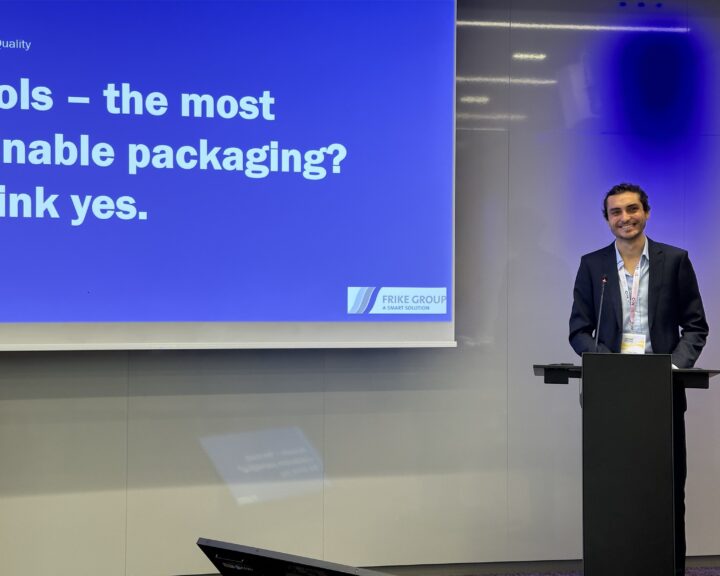
Lively hustle and bustle in the aisles, lively discussions, and exciting presentations: on 5 and 6 June 2024, numerous decision-makers from the cosmetics industry and their suppliers gathered at CosmeticBusiness 2024 at the MOC Munich to exchange ideas about trends, innovations and new projects. At the international supplier fair for the cosmetics industry, 418 exhibitors from 23 countries presented their latest products and solutions in the fields of ingredients, manufacturing and packaging. The extensive specialist programme in the INNOVATION CORNER with top-class speakers such as Alicia Lindner from BÖRLIND and Birgit Huber from IKW was very well received.

In the DACH region, Cosmetic Business is the most important trade fair for packaging materials and therefore also for contract manufacturers. More raw material suppliers are also exhibiting, but interest is rather low. Our stand in Hall 3 had a very good location and was literally overrun in places. According to Ronnie Heusser, Sales Manager at FRIKE Cosmetic, we had never made so many new contacts at a Cosmetic Business as we did this year.

And what else is there to report about the trade fair?

Sustainability remains the hot topic in the packaging sector. This year, exhibitors will primarily be showing how they are using mono-material solutions to further facilitate recycling and thus recyclability. The fact that recycled materials can be used more and more effectively in the form of PCR will also be demonstrated at the exhibition using various examples.

Eight corners and less weight

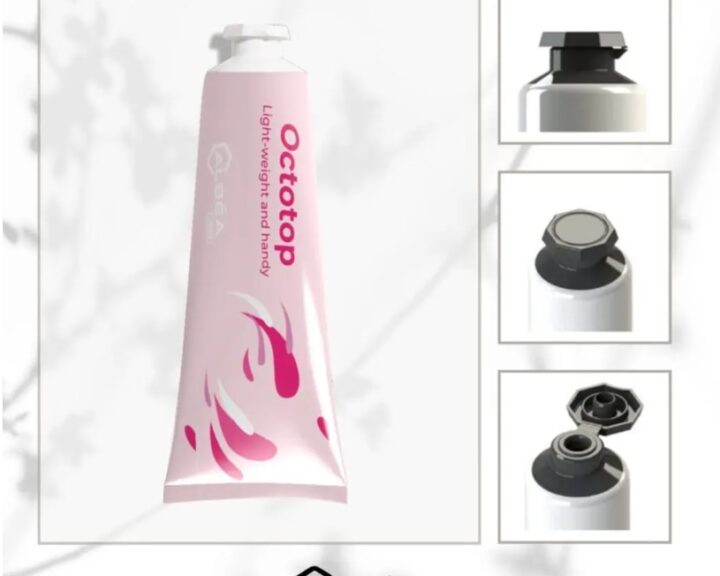
Albéa has expanded its EcoTop family. The combined cap-head system is now complemented by the octagonal OctoTop. L'Occitane already uses them for its hand cream tubes, as they correspond to the brand's traditional design. According to the manufacturer, OctoTop has reduced the weight by 21 per cent compared to the previous solution. It also reduces the CO2 footprint. The new solution is made from PE and is suitable for recycling in the HDPE stream.

How plastics become granite and silver

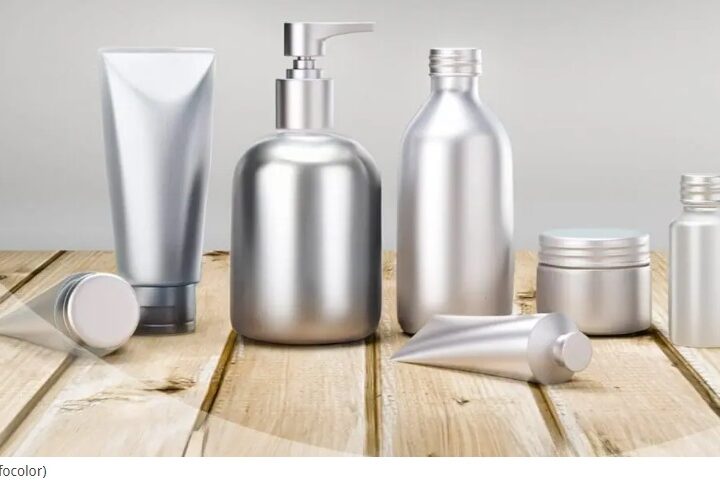
The German masterbatch supplier Lifocolor is presenting two new colour effects from its portfolio. The masterbatches for granite effect create an authentic stone look on PE, PP, ABS, PMMA and TPE. They are available in various shades and fulfil the EU and FDA requirements for food contact, according to the company. They can be used for injection moulding and extrusion processes at up to 280 degrees Celsius. With its new silver and metallic masterbatches, Lifocolor aims above all to enable the recycling-orientated design of cosmetics packaging. The silver colours should be able to be correctly identified in the sorting system using near-infrared (NIR) and fed into the recycling process.

Next generation PCR tubes

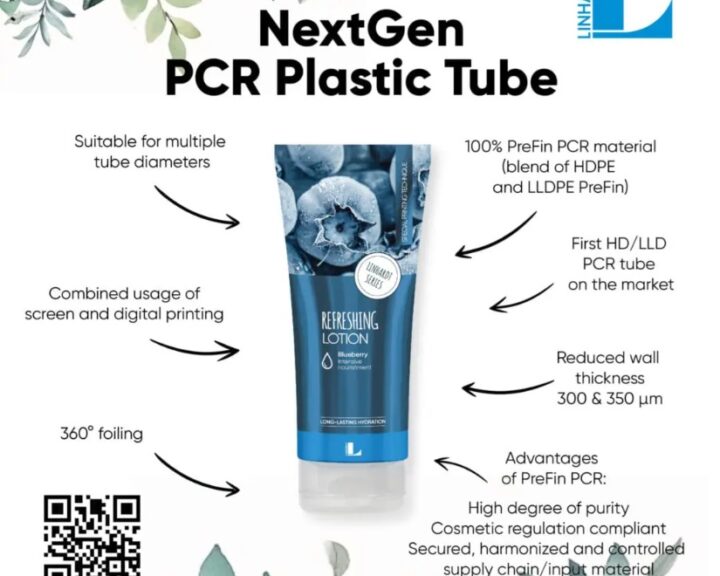
Linhardt describes itself as a pioneer in the use of PCR plastics in tubes. This year, the company is presenting its NextGen PCR Plastic Tube. It is the first tube made from HD and LLD PCR. It is made from a mixture of rigid and flexible PE, which consists of 100 per cent cosmetic-grade PreFin PCR. According to the manufacturer, this has a high degree of purity and comes from a safe, controlled supply chain. The tubes can be customised using screen and digital printing as well as 360° foiling.

Share article